Cross-industry solutions

Cross-industry thermal energy technology solutions

Aerospace

Aerospace-grade electronics are the core components supporting the intelligence of modern aircraft, spacecraft, and missile systems, encompassing key areas such as high-reliability integrated circuits, radiation-resistant electronic devices, and airborne sensor networks. Their technological barriers lie in extreme environment adaptability (wide temperature range of -55℃ to 200℃, resistance to cosmic ray radiation), lightweight integration (3D packaging technology on ceramic substrates), and real-time signal processing capabilities (FPGA+ASIC heterogeneous computing architecture).

Adaptability to extreme environments

Wide temperature range of -55℃ to 200℃, resistant to cosmic ray radiation.

Lightweight integration

Ceramic substrate 3D packaging technology.

Real-time signal processing

FPGA+ASIC heterogeneous computing architecture.

Recommended Products

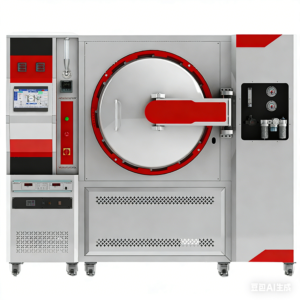
Vacuum brazing furnace

2026-03-07

Automobile manufacturing

Energy consumption is significantly lower than that of salt bath furnaces. Modern advanced vacuum furnaces utilize high-quality insulating materials for the heating chamber's walls and barriers, concentrating electrical and thermal energy highly within the heating chamber, resulting in significant energy savings.

Low energy consumption

Energy consumption is significantly lower than that of salt bath furnaces.

High-quality thermal insulation materials

Insulated walls and barriers made of high-quality insulation materials.

Recommended Products

Mechanical

A device for heating in a vacuum environment. It is connected to a high-vacuum pump system via pipes within a furnace chamber sealed by a metal casing or quartz glass cover. The furnace vacuum can reach 133 × (10⁻² to 10⁻⁴) Pa. The furnace heating system can use direct electric resistance wire (such as tungsten wire) or high-frequency induction heating.

Vacuum environment

Electric heating

High frequency induction heating

Recommended Products

Electronics

Brazing is a welding process in which a group of weldable parts are heated to a temperature above the melting point of the filler metal but below the melting point of the base metal under vacuum conditions, and the weld is formed by the wetting and flow of the filler metal on the base metal (the brazing temperature varies depending on the material).

Vacuum

Brazing

Recommended Products

Military Industry

It features a high degree of mechatronics integration. With improved temperature measurement and control accuracy, workpiece movement, air pressure regulation, and power adjustment can all be pre-programmed and set to execute quenching and tempering step-by-step.

Mechatronics

Programming settings

Recommended Products

Metallurgical

To prevent deformation of the furnace shell and deterioration of the sealing material due to heat, the furnace shell is generally cooled by water or air. The furnace chamber is located inside the sealed furnace shell. Depending on the furnace's application, the furnace chamber contains different types of heating elements, such as resistance heaters, induction coils, and electric and electron guns.

Sealed furnace shell

Water cooling/Air cooling

Recommended Products

New Energy Batteries

New energy battery materials are a core driving force for energy transformation. From material innovation to industrial application, various fields are accelerating breakthroughs in the technological bottlenecks of traditional batteries. Breakthroughs in new energy battery materials are propelling solid-state batteries from the laboratory to industry and driving technological upgrades in energy storage, automobiles, and other fields. The collaboration of the entire industry chain (materials, manufacturing, and application) and the deep integration of industry, academia, and research will accelerate the resolution of "range anxiety" and "safety pain points" in the new energy industry, contributing to the achievement of "dual carbon" goals.

Battery life

Safety

Recommended Products

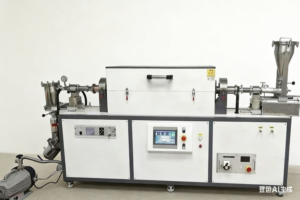
CVD rotary furnace

2026-03-08

Semiconductor Photovoltaic​

The semiconductor photovoltaic industry is an intersection of new energy and chip technology, with high-efficiency photovoltaic cells and semiconductor-grade silicon materials at its core: N-type TOPCon cells: conversion efficiency exceeding 26.5% and bifaciality exceeding 85%; perovskite tandem cells: laboratory efficiency reaching 33.7%, with costs reduced by 50% compared to crystalline silicon; the industrial chain extends from high-purity quartz sand (purity 99.9999%) to intelligent operation and maintenance systems, driving the LCOE of photovoltaic power generation down to below 0.2 yuan/kWh.

Interdisciplinary fields

Recommended Products

Ready to start your project?

Contact our engineering team to discuss your specific vacuum heat treatment needs. We tailor solutions to every industry challenge.

滚动至顶部